

How much does a new roof cost in 2026?
Understanding Roof Replacement Costs in Aberdeenshire
A roof is the main protector of your hard-earned asset but can only provide that protection if it itself is looked after.
Over time, degradation due to the elements will occur, but how quickly this happens is dependent upon both location and maintenance of the property.
Damaged roofs, if left unattended, can quickly worsen due to the ingress of water causing damage to not only internal aesthetics but structural defects over time.
With a roof being one of the largest expenses associated with a property, getting the right information is essential.
As a rule of thumb, with a replacement roof, you can expect approx. 20 years before needing to conduct maintenance. Gutters however should be attended to on a regular basis to prevent blockages and ensure proper drainage.
The duration to replace a roof is very dependent on size with a smaller slate/tile roof taking around a week, to a larger more complex job taking 2-4 weeks. Flat roofs can be replaced in a shorter timeframe.
Roof Replacement Cost by Roof Type
The most common roof types found within Aberdeen and Aberdeenshire are listed below:
| Roof type | £ per sqm | Estimate Range (£) |
|---|---|---|
| Gable | £140 – £190 | £11,200 – £15,200 |
| Hip | £140 – £190 | £11,200 – £15,200 |
| Flat | £120 – £170 | £3,600 – £5,100 |
The figures above are based on an assumed roof area of 80 sqm for both gable and hip roof types, and 30 sqm for a flat roof.
These costs are intended to provide a general indication of anticipated pricing. Actual costs can vary significantly depending on the overall size and complexity of the roof, as well as the materials selected.
In addition to the estimates shown, the following additional costs should be budgeted for where applicable:
Scaffold hire, ranging from £500 for a basic tower to £3,000+ for larger or more complex structures.
Removal of the existing roof covering and any associated items, such as gutters, which typically costs £1,500 – £2,500.
Skip hire, generally £250 – £300, depending on the duration of hire and placement location. If a skip is positioned on a public road, a council permit is required; however, this is arranged by the skip hire company.
Timber replacement, which may be necessary due to water ingress or rot and is assessed on a case-by-case basis. Estimated cost: £100 – £600.
Insulation upgrades, which may be considered to improve comfort and reduce energy bills. Estimated cost: £400 – £800.
Guttering, available in a wide range of materials, styles, and colours, from traditional drainage systems to more contemporary options. Estimated cost: approximately £750.
Fascias and soffits, which traditionally require regular maintenance when constructed from timber. Maintenance-free alternatives such as PVC are now available. Estimated cost: £2,500 – £4,000.
Breakdown of Additional Costs for a New Roof
To summarise the differing parts when considering a new roof, the following may be required:
| Item | Purpose | Cost |
|---|---|---|
| Scaffold | Construction, hire and deconstruction | £500+ |
| Remove existing roof | Dispose of all pre-existing parts | £1,500 – £2,500 |
| Skip hire | Hire of skip for material disposal | £250 – £300 |
| Timber | To replace rotten timbers | £100 – £600 |
| Insulation | Providing comfort and energy saving | £400 – £800 |
| Guttering | Enabling drainage | £750 |
| Fascias and soffits | Aesthetically pleasing and insulating protection | £2,500 – £4,000 |
To get a full understanding of the costs associated with your property, get in touch with Stork now to discuss with an expert.
All customers are provided expert guidance with written quotations provided as standard.
Signs You May Need a Roof Replacement
See the light – through the roof that is. If you can see light coming through the roof space or attic, guidance needs to be sought with urgency.
Nail sickness – the nails used to fixate slates to a roof degrade over time, losing their strength and ultimately losing their hold of the slate. A few slipped slates can be repaired with guidance given regarding the remainder of the roof. If there are several slipped slates or rows of slates all slipping together, serious consideration should be given to more extensive works.
Water ingress – dripping or staining are both signs water is getting in somewhere it shouldn’t be. This can also lead to mould within a property.
Sagging roof – this is normally caused by the degradation of the sarking boards or timbers within the roof due to ongoing water ingress.
Moss – older tiles provide a good surface for moss growth. The porosity allows the roots to enter the tiles and cause damage over time. Left untreated, tiles can degrade beyond repair.
Roof Replacement Timelines
Replacing a roof involves numerous moving parts, not least material procurement, property size and weather. Realistic expectations are 1 week for smaller roofs and 2-4 weeks for larger roofs.
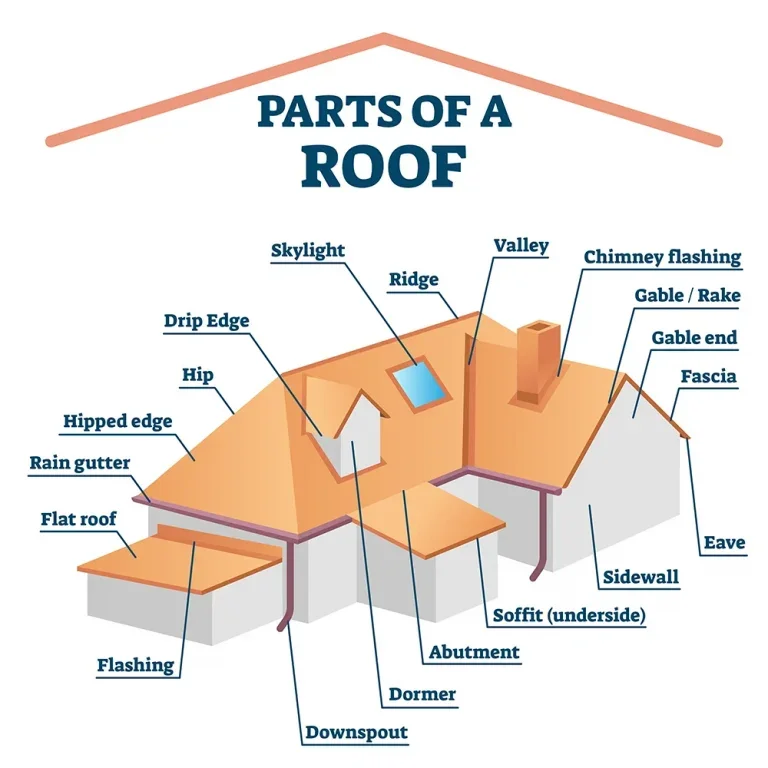
Roofing Terms Explained
Want to fully understand what your quote says? Although we strive to make all our communications and quotations as clear as possible, all of our customers should always feel free to ask us any question. To help you with some of the more common roofing terminologies, please read on.
Battens – Thin strips of wood positioned on the roof to enable fixation of slates/tiles
Cement Skew – A mortar fillet made from cement and positioned between the roof and skew stones.
Chimney Haunching – The cement used to fixate chimney cans atop the chimney crown. Built with curved edges to enable water to run off.
Fascia – Decorative boards along the underside edge of a sloping roof
Flashing – Protective sheeting (generally lead) to protect joints
Gable – The triangular upper part of a wall at the end of a property ridged roof
Hip – A hip roof has all sides sloping downwards to the walls with no gables or other vertical sides to the roof
Ridge – The roof apex
Side slip – The zinc protective insert where a dormer window meets the main roof
Skew stones – Stones at the side of a roof which project above the roof itself, and are used to separate tenements or at gable ends
Soffit – Decorative board used to seal the gap between the fascia board and the property wall
Strike Scaffolding – The scaffold is struck or removed once it has served its purpose
Valley – The point where 2 sloping roof sections meet, generally protected through a zinc insert
Looking for an estimate of your roof replacement costs?
Our interactive Roof Replacement Cost Calculator gives you a quick, tailored estimate in just a few steps…